Why Renovations Look Worse Before They Look Better
- Maria Bowers
- Mar 6
- 4 min read
(And Why Even I Have to Trust the Process)

There’s almost always a moment during a renovation when you stand in the middle of the space and think, What have we done?
I’ve felt it in my own home, and I’ve seen it in clients’ faces more times than I can count. The walls are open, floors are covered, cabinets aren’t fully installed, and lighting looks awkward and temporary. Nothing quite matches yet. The space somehow feels louder, smaller, and far less beautiful than you imagined.
Even when you know there’s a plan, it can shake your confidence a little. That moment is normal. In fact, I’ve come to expect it.
The Middle Is Where Doubt Shows Up
Renovations happen in layers. What you see during construction isn’t the finished room—it’s simply the framework that supports it.
At different stages you might see exposed framing, unpainted drywall, cabinet boxes without doors, countertops waiting to be installed, or tile that hasn’t been grouted yet. None of those pieces are meant to look beautiful on their own.
But when you’re living in the middle of it, it’s hard not to react to what’s right in front of you. I still do. There’s always a split second where I think, Okay… this looks worse right now.
And sometimes it actually does. But worse doesn’t mean wrong. It usually just means unfinished.

Why I Always Start With a Full Design
This is exactly why I don’t believe in figuring things out as we go. Before demo begins, there should be a full material palette, detailed layouts, finish selections, lighting plans, and a clear direction for the space. Not just inspiration images—an actual plan.
When everything has been thought through from the beginning, construction becomes execution rather than experimentation. That makes the messy middle much easier to navigate.
AI tools and online inspiration boards can be great for sparking ideas. They’re wonderful for exploring styles and visualizing possibilities. But inspiration isn’t the same thing as a plan.
An AI image can’t measure your ceiling height, account for structural beams, understand your budget, or resolve how materials will actually meet and function in a real home. Inspiration shows what’s possible. A design plan makes it work. ( I wrote more on AI as inspiration here)
When the palette has been chosen thoughtfully and every element has been considered in context, you have something solid to come back to when the space feels chaotic.

Why Doubt Still Happens
Even with preparation, it’s completely normal to second guess things mid-project. There’s decision fatigue, budget awareness, and the simple disruption of living in construction. Visually, nothing feels finished yet.
Our brains don’t love unfinished things—we want to see the result. So when a room looks worse before it looks better, the instinct is to question the decisions.
I’ve had clients call and ask, “Are we sure about this?”
And most of the time my answer is simple: we’re just not done yet.

What I Remind Clients During This Stage
When that uneasy moment hits, I always bring things back to the plan. We look at the full design palette again instead of focusing on one sample. We revisit renderings rather than staring at drywall, and we try not to compare a construction phase to finished photos online.
I also remind clients that materials transform once everything is installed. Tile looks different once it’s grouted. Cabinets feel different once hardware is added. Lighting changes once the right bulbs are installed and dimmers are set.
The final stretch—paint, trim, hardware, and styling—is what really brings everything together. I’ve seen spaces feel uncertain for weeks and then suddenly, in the last phase, everything clicks.
And I’m Living This Right Now
I’m actually feeling this in real time. I’m currently redesigning two bedrooms and a bathroom. It’s not full construction—no walls coming down—but we’re in that awkward in-between stage where the old colors are still visible, the new paint is going up, and nothing else has been installed yet.
And I’ll admit it: seeing the new paint next to the old finishes made me second guess the colors for a moment. It’s amazing how different a color can feel when it’s sitting next to something it wasn’t chosen to live with.


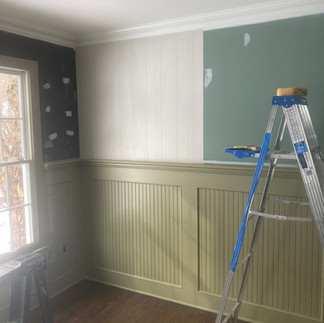


But then I reminded myself of the same thing I remind my clients. I didn’t choose those colors in isolation. I built a full palette (this room's palette is above) for each room and selected them knowing what furniture, lighting, textiles, and finishes are coming next.
Right now the rooms look unfinished. That doesn’t mean the colors are wrong. It just means the layers aren’t in yet. So even as a designer, I’m trusting the process in my own work.
Renovation Is a Process, Not a Snapshot
I’ve learned this in my own home, and I’ve guided many clients through the same experience. Trusting the process doesn’t mean pretending the middle is easy. It simply means remembering that the middle isn’t the end.
Unfinished doesn’t mean wrong. It means you’re not done yet.
When a renovation—or even a room redesign—begins with a thoughtful plan and a cohesive palette, the final result almost always reflects that preparation. The messy stage is temporary. The plan is intentional.
Thinking about renovating?
Start with the design, not the demo. It won’t eliminate every moment of doubt, but it will give you something steady to come back to when the middle feels messy.
Thanks for reading and trusting the process with me,

If you enjoy the real side of design — the process, the lessons, and the behind-the-scenes moments — I share more of that in Design in Real Life.


de88 dạo này thấy nhiều người nhắc nên mình cũng ghé thử cho biết, kiểu vào xem giao diện với cách họ trình bày thôi. Mình không đọc kỹ từng phần, nhưng cảm giác đầu tiên là thanh menu chính chia nhóm khá gọn, bấm cái là ra đúng mục chứ không bị lạc. Lướt trên điện thoại cũng ổn, cuộn xuống mấy khối nội dung thấy mượt, chuyển qua lại không bị giật hay rối mắt. Với lại mình để ý họ có đoạn ghi chú nhắc người dùng tự kiểm tra điều khoản trước khi làm gì liên quan giao dịch, đặt khá dễ thấy nên nhìn cũng yên tâm hơn chút. Nói chung mình chỉ xem nhanh,…
https://xosoplus.mobi/ mình ghé vô thử cho biết vì thấy mọi người nói hoài, kiểu xem giao diện họ làm ra sao thôi. Vào cái là thấy họ chia mục theo ngày khá rõ, có bài XSMB theo từng ngày nên không bị lạc, nhìn tiêu đề là biết đang đọc phần nào. Mình thích nhất là cái bảng “Đầu Lô tô / Đuôi Lô tô” họ để dạng cột gọn gàng, kéo xuống là thấy ngay, không phải căng mắt tìm. Mấy khối nội dung tách ra rành mạch nên lướt trên điện thoại cũng ổn, không bị dồn chữ. Nói chung cảm giác dễ xem, đặc biệt là khu bảng Đầu Lô tô/Đuôi Lô tô hiển thị rõ ràng…
I've been using this AI presentation tool for a few projects, and it's been a real time-saver for creating professional slides and visual presentations. I also found the built-in resources, including the ppt to pdf tool, the slide deck guide, and articles on presentation ideas topics and fun presentation ideas, genuinely helpful. Overall, Havi offers a great mix of AI features and practical learning resources for anyone creating presentations.
sc88 dạo này thấy bạn bè nhắc hoài nên mình cũng ghé vào xem thử cho biết thôi. Mình không nạp hay chơi gì, chỉ lướt qua mấy trang nội dung xem họ làm web ra sao. Cảm giác đầu tiên là load khá nhanh, chuyển mục qua lại cũng ổn, không bị đứng hay giật nên nhìn “mượt” hơn mình tưởng. Giao diện thì kiểu đơn giản, dễ nhìn, các khối thông tin xếp gọn gàng nên đọc lướt cũng nắm được ý chính. Mình để ý họ tối ưu cho điện thoại khá tốt, kéo xuống vẫn thấy bố cục rõ ràng chứ không bị rối chữ. Nhìn chung chỉ cần vài phút là quen tay vì menu…
75bd.app showed up in a couple posts, so I poked around out of curiosity more than anything. The first thing I noticed was how easy it is to find your way around—nothing’s buried, and the navigation feels obvious without being in your face. I’m also a sucker for pages that don’t cram everything together, and this one keeps things spaced out so your eyes aren’t bouncing all over the place. It’s not trying to be flashy or “look cool,” it just feels tidy and usable when you’re scrolling. Even when I clicked a few different spots, the layout stayed consistent and I didn’t get that lost-in-a-maze vibe. The clean grouping and separated content blocks are what stood out most on…