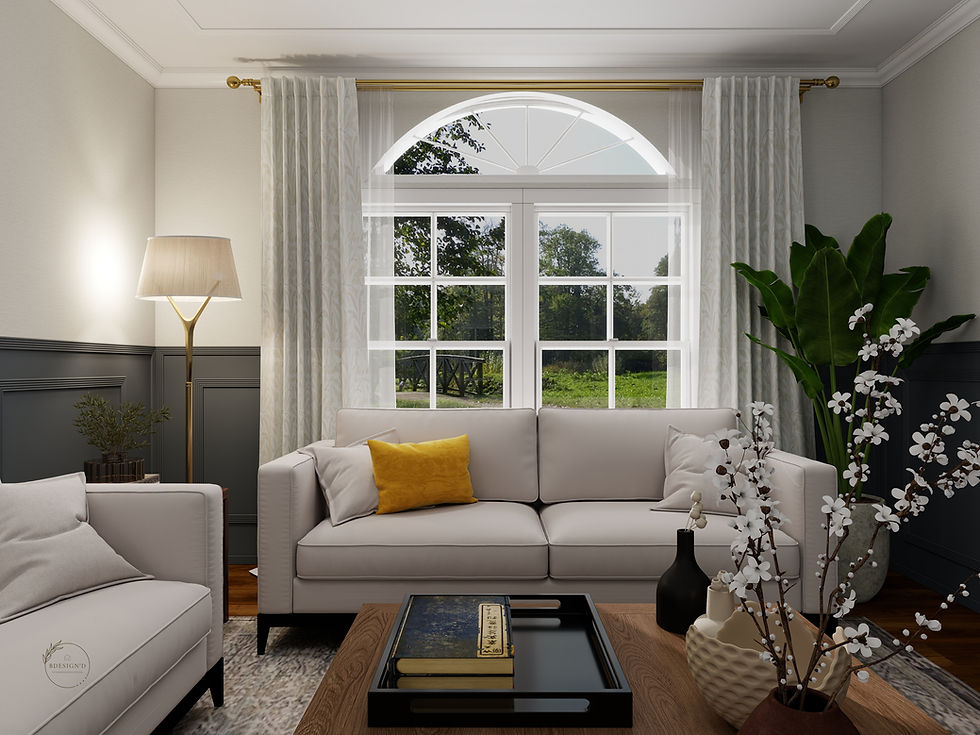
Why Window Treatments Should Be Planned Early in a Room Design


Window treatments used to overwhelm me. I would go to the store, grab a pair of 84-inch curtain panels, and hang the rod wherever the fabric happened to graze the floor—even though my ceilings were nine feet high. I wasn’t thinking about the proportions of the window or the wall. I was letting the length of the curtains decide where the rod should go.
Looking back, I realize how many people do the same thing because it seems like the easiest way to shop. You find a fabric you like, choose one of the standard lengths, and try to make it work. But the panel length should be based on where the rod needs to hang—not the other way around.
Once I understood that, window treatments started to feel much less overwhelming. I learned to begin with the window, the wall, the ceiling height, and how the room needs to function before choosing the treatment itself. I also learned just how much the right treatment can change—not only the window, but the entire room.
Hanging drapery incorrectly really can ruin the look of a window. A rod that is too low can make the ceiling feel lower. Panels that are too narrow can block natural light and make the window look smaller. Drapery that is too short or not full enough can make even an expensive fabric look unfinished.
I don’t say that to make window treatments sound intimidating. It’s actually the opposite. When they’re planned correctly, they can fix proportions, soften an awkward wall, make a window look larger, and pull an entire room together. But when they’re treated as an afterthought, the options become much more limited.
Window treatments are often left at the very bottom of the design list. First come the floors, paint, furniture, lighting, built-ins, and artwork. Then, once the room is almost finished, someone looks at the bare windows and says, “Okay, now what do we do here?”
I understand why. Drapery and shades often feel like finishing touches. And technically, they may be among the last things installed. But they really shouldn’t be among the last things planned.
I see this come up all the time. A sofa has already been placed too close to the window. A built-in leaves no room for drapery panels. A sconce is exactly where the rod needs to go. Or beautiful ready-made panels are ordered, only to look too short once we decide the rod should be mounted higher.
Window treatments do much more than cover a window. They affect how tall the room feels, how much light comes in, where the furniture can sit, and whether the space feels soft and finished. They can also solve very practical issues like privacy, glare, and temperature control.
You don’t need to select every fabric or finalize every detail on day one. But you should have a general plan before the rest of the room gets too far along.

Start with how you actually use the room
Before looking at fabrics or scrolling through inspiration photos, think about what the room needs from its windows.
Do you need privacy during the day, at night, or both? Does the afternoon sun hit the television? Are you trying to darken a bedroom? Is there a pretty view you don’t want to cover? Do you want the windows to feel taller, or does the room simply need some softness?
The answers will be different from room to room.
A bedroom may need a lined roman shade or blackout treatment, while a front living room may only need privacy in the evening. A bathroom needs privacy but usually benefits from keeping as much natural light as possible. In a family room, glare on the television may be the biggest issue. A dining room, on the other hand, may not need much light control at all—it may just feel unfinished without fabric at the windows.
This is why I don’t like choosing window treatments based only on what looks pretty in a photo. They have to work for the way you live in the space.
Hanging drapery higher can change the entire room
One of the most common changes I recommend is raising the drapery rod above the window trim instead of placing it directly on top of the casing.
That little change can make the windows appear taller and give the whole room better proportion. It draws your eye upward, which is especially helpful when the windows are small, sit low on the wall, or feel a little underwhelming compared with the rest of the room.
In a room with crown molding, I’ll often look at the space between the window casing and the crown to find the best rod height. In a two-story room or one with a sloped ceiling, the architecture may call for something different. There isn’t one measurement that works in every house.
The width of the rod matters too. If there’s enough wall space, extending it beyond the window allows the panels to sit mostly off the glass when they’re open. That gives you more natural light and makes the window feel wider.
But this needs to be planned before ordering the panels. If the drapery is measured for a rod mounted just above the trim and we later decide to raise it six inches, the panels will be six inches too short. That isn’t the kind of detail you can hide once everything is installed.

Drapery, shades, or both?
Not every window needs full-length drapery, and not every room needs layers. Sometimes a simple roman shade is the cleanest and most practical solution.
Roman shades work especially well when there isn’t much wall space beside the window, when furniture sits directly below it, or when you want a more tailored look. Woven shades can bring in warmth and natural texture. Café curtains are useful when you need privacy on the lower part of a window but still want light coming through the top.
Layering a shade with drapery can give you the best of both. The shade handles privacy and light control, while the drapery adds softness, height, color, or pattern. I love this look, but it should have a reason. Adding layers just because they look nice can become expensive and visually heavy, especially in a smaller room.
Sometimes stationary drapery panels are enough. They frame the window and make the room feel finished but aren’t intended to close. A shade behind them can handle the practical part.
The right choice really depends on the window, the room, and what you need the treatment to do.
The furniture plan matters more than people realize
Furniture and window treatments can’t be planned separately.
If a bed sits under a window, full-length panels may not make sense. If a sectional runs into the corner, there may not be enough space for drapery to hang without bunching behind it. A dining chair that constantly catches the fabric will become annoying very quickly. Radiators, baseboard heaters, and vents can also affect both the length and the type of treatment you choose.
This doesn’t mean the furniture can never sit near a window. It just means the two need to be considered together.
Sometimes moving a sofa a few inches gives the drapery enough space to fall properly. Sometimes the solution is a roman shade instead of panels. And sometimes we decide on decorative stationary panels that don’t need to move at all.
These decisions are much easier to make while we’re working through the furniture plan than after everything has been delivered.
Built-ins, molding, and lighting can create conflicts
This is a big one in renovation projects.
If a window sits beside a fireplace, between bookcases, or close to a corner, there may be very little room for a drapery rod and panels. A built-in can look perfectly proportioned on its own but leave the window treatment feeling squeezed in as an afterthought.
The same thing happens with wall molding and sconces. If box molding is being installed, its layout should relate to the windows and the treatment. If sconces are planned, we need to make sure they aren’t placed where the rod, finial, or fabric will go. Even an outlet for a motorized shade needs to be considered before the walls are finished.
This is exactly why I like to look at the entire wall at once. The fireplace, built-ins, windows, trim, lighting, and furniture all need to work together. Each item can be beautiful by itself and still feel awkward when combined with everything else.
Working through these details on a floor plan, elevation, or rendering is much easier—and usually much less expensive—than trying to fix them after construction.
Older homes and unusual windows need their own solution
Not every house has a neat row of perfectly matched windows. Older homes especially tend to have windows at different heights, very deep trim, unusual proportions, or limited wall space around them. Sloped ceilings, two-story rooms, and arched windows can create their own challenges too.
My instinct isn’t always to force everything to look perfectly symmetrical. Sometimes the quirks are part of the home’s character.
Instead, the treatment can help bring better visual balance. A continuous rod may help a group of windows read as one unit. A tailored roman shade can clean up an awkward opening. Shorter decorative panels may work when full-length drapery isn’t practical. In some cases, leaving one window untreated is actually the better choice.
There isn’t a standard answer for every unusual window. It needs to be measured, photographed, and considered as part of the entire room.
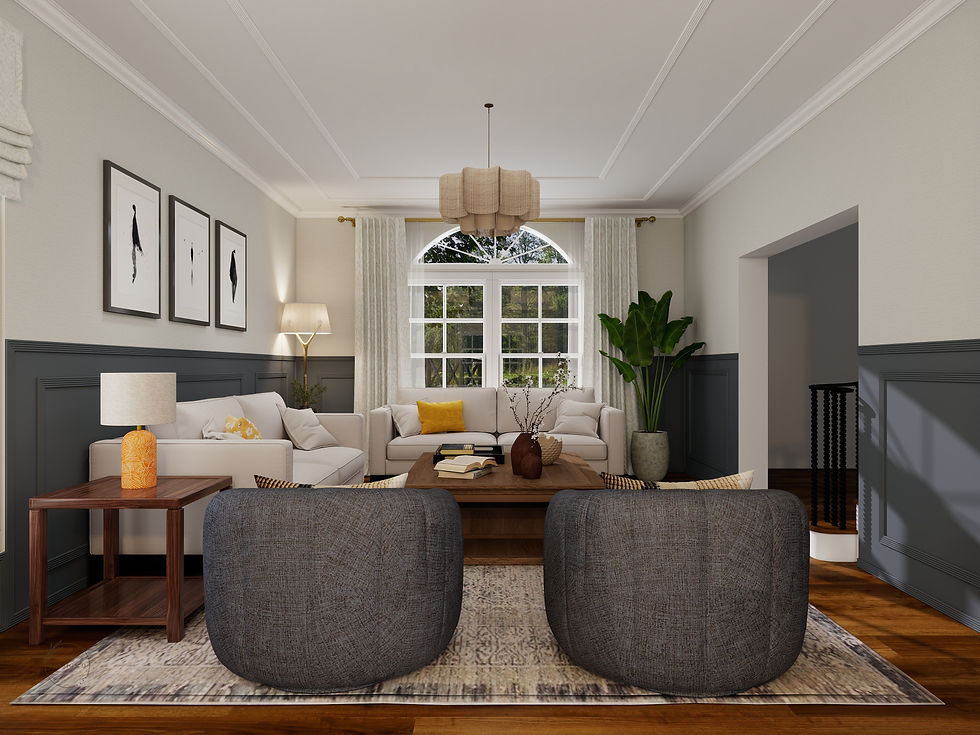
Arched windows: highlight the shape or cover it?
Arched windows deserve a little extra thought because the arch is usually an architectural feature worth seeing. The first question I ask is whether the treatment needs to provide privacy or light control over the entire window, or whether the upper arch can remain uncovered.
In some rooms, a shade can cover the rectangular portion while leaving the arch exposed. That keeps the character of the window visible and allows more natural light into the space. This can be a beautiful solution in a living room, foyer, or other area where full privacy isn’t necessary.
In a bedroom or a room with strong sun, leaving the arch uncovered may not be practical. Full-length drapery mounted above and outside the complete window can cover everything when needed. When the panels are open, they should stack far enough to the sides that the arch still feels like part of the design rather than disappearing behind fabric.
The rod height matters here. Mounting it directly across the beginning of the arch can visually cut the window in half. Sometimes it’s better to place the rod above the highest point of the arch, as long as the ceiling height and panel length allow it. In other situations, especially with a very tall or dramatic arch, a custom treatment that follows the shape may make more sense.
The goal is to be intentional. If the arch is one of the best features in the room, the window treatment should work with it—not cover it simply because that was the easiest place to install a rod.
Fabric can look very different once it covers a large area
A small fabric sample may seem quiet, but once it becomes several full drapery panels, it can have a major presence in the room.
That’s why I look at window-treatment fabric alongside the wall color, upholstery, rugs, wallpaper, wood tones, and trim. A white linen may suddenly look too cool against a creamy paint. A beige fabric can pull pink or gray depending on the light. A pattern that looks subtle in your hand may feel much busier when repeated across an entire wall of windows.
Texture also changes the feeling of the space. Linen is relaxed and airy. Velvet feels richer and more formal. A woven shade can add warmth to a room that has a lot of painted surfaces. A tailored fabric roman can feel clean without being cold.
Everything doesn’t need to match. In fact, I would rather it didn’t. But the colors and materials should feel like they belong in the same room.
And always look at the fabric in the actual space. Natural and artificial light can completely change how a color reads throughout the day.

Not every window treatment needs to be fully custom
Planning window treatments early doesn’t mean I think every window in the house needs an expensive, completely custom treatment. There are several options between grabbing the first panels you see at a store and having something designed and fabricated entirely from scratch.
The right choice depends on the window, the room, the look you want, and where it makes sense to spend the budget.
Ready-made treatments are the most accessible option. You can find panels, roman shades, woven shades, and simple blinds through home-furnishing stores, department stores, home-improvement stores, local shops, and online retailers. If the window is a fairly standard size and the available lengths work, ready-made treatments can look very good.
You can also improve ready-made panels by having a local seamstress or workroom hem them, join panels together for more fullness, add lining, or change the header style. This is a great middle ground when you like the fabric but want the finished treatment to look more intentional.
Semi-custom treatments offer more choices without starting completely from scratch. These are available through local window-treatment stores, some fabric and design showrooms, in-home window-covering companies, and online retailers. You usually choose from an existing collection of fabrics, colors, linings, hardware, and styles, and the treatment is then made to your measurements.
Semi-custom is especially helpful for roman shades, woven shades, blinds, and drapery when standard store sizes don’t quite work. It gives you a more tailored result while limiting the number of decisions—and often the cost—compared with a fully custom treatment.
Fully custom treatments can be ordered through an interior designer, local drapery workroom, fabric showroom, or independent window-treatment specialist. This route gives you the most control over the fabric, trim, lining, pleat style, proportions, hardware, and installation.
Fully custom may be the best solution for arched windows, unusually tall spaces, extra-wide windows, challenging room conditions, or when you want a very specific fabric and design.
And custom doesn’t automatically mean outrageously expensive. The final price depends on the fabric, amount of yardage, treatment style, lining, hardware, and complexity of the fabrication and installation. A simple custom roman shade in a reasonably priced fabric may cost less than elaborate semi-custom drapery with upgraded hardware. “Custom” simply means it’s being made for your particular window and specifications.
No matter where the treatment comes from—a home store, an online retailer, a local window-treatment company, a seamstress, a workroom, or a designer—the measurements and correct hanging can make or break the finished result.
So, when should you start thinking about window treatments?
For a renovation, I start considering them during the design phase—especially if the project includes new windows, built-ins, trim, lighting, or electrical work.
For a room refresh, I think about them along with the furniture plan, paint, rugs, and major textiles. You don’t necessarily need to order the window treatments first. You just need to know what type will work, how much space it needs, and whether it affects any other decisions.
It can be as simple as saying, “We’re planning full-length drapery here, so we need space on both sides of this window,” or, “This bedroom will need a blackout roman shade, so let’s make sure the window depth will accommodate it.”
That small amount of planning keeps you from reaching the end of a beautiful room and realizing the only option left is the one that fits—not necessarily the one you would have chosen.
Window treatments may be installed last, but when they’re considered from the beginning, they look like they truly belong in the room. And that’s usually the difference between a space that’s technically finished and one that actually feels finished.
Until next time,

Enjoy thoughtful design advice and a behind-the-scenes look at real projects? Join Design in Real Life, my monthly newsletter, for inspiration delivered straight to your inbox.